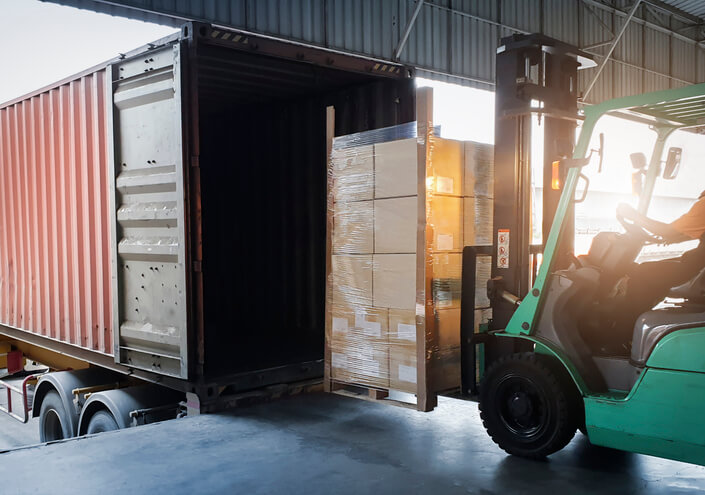
If your business relies on freight companies to deliver products to customers or to restock your shelves and warehouse, you have probably come across terms like full load and pallet freight. Most businesses pick one of these options early on and keep using it for years. Over time, though, order volumes change, customers move, and new routes open up. The option that made sense three years ago may no longer be the one that gives you the best value today.
If you care about spending your freight budget wisely, it helps to know how each option works and where it fits. In this post, we will explain what full load freight and pallet freight mean, look at the factors that should guide your choice, compare both options side by side, and answer a few common questions about compliance.
What is Full Load Freight?
Full load freight means you book an entire truck for your goods alone. The truck is yours for that trip, whether you fill the trailer to the back doors or leave some space empty.
Think of it like hiring a whole bus for your group instead of buying a few seats on a public one. Nobody else gets on, and the bus goes straight to where you need it.
What is Pallet Freight?
Pallet freight, often called Less Than Truckload or LTL, means your goods share trailer space with shipments from other businesses. You only pay for the floor space or the number of pallets your cargo takes up.
Going back to the bus example, this is like buying a few seats on a bus that other passengers are also riding. You pay less, but the bus makes a few stops along the way. If you would like to understand the process in more detail, our guide on pallet transport is a helpful starting point.
Key Factors to Consider When Choosing Between Full Load and Pallet Freight
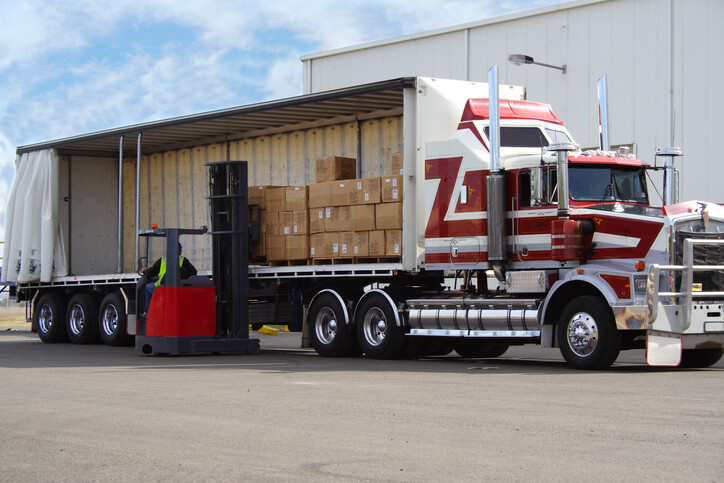
Every business ships differently, so the right choice depends on a few factors. Here is how each one shapes the decision.
Shipment Volume and Weight
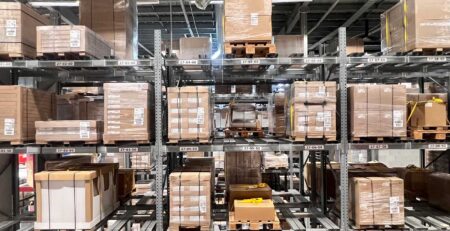
A full load usually covers larger shipments of roughly 10 to 30 pallets, or heavy loads weighing somewhere between 2,000 and 5,000 kilograms and above. Pallet freight suits smaller shipments of around 1 to 6 pallets that do not need a whole truck.
How Often You Ship
Businesses sending substantial volumes every week may benefit from full loads, particularly when their goods travel together to one destination. If your dispatches are ad-hoc, irregular or seasonal, pallet freight gives you flexibility without paying for space you will not use.
Cost and Budget
For smaller consignments, shared pallet freight will often cost less than booking a dedicated vehicle. The saving depends on your route, shipment dimensions, weight and delivery requirements, so comparing quotes for the same load is the best way to assess value.
Delivery Time Frame
A full load travels directly from your pickup point to the drop-off point, so it usually arrives faster and within a more predictable window. Pallet freight moves through a wider logistics network, where goods may be sorted or transferred at one or more depots. This adds time, especially during periods of seasonal demand when networks are busier.
Handling and Risk of Damage
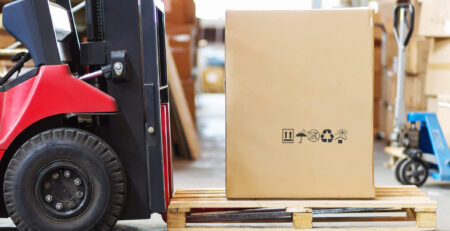
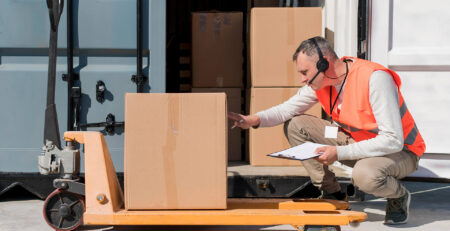
With a full load, your goods are loaded once and unloaded once, and no other freight is added along the way. Fewer hands touch your shipment, which lowers the chance of damage or loss. Pallet freight involves more handling at depots, so secure packing and wrapping become more important.
Route and Destination
Long interstate runs, such as Melbourne to Brisbane or Adelaide to Perth, often favour full loads when volumes are high, as direct travel saves time over long distances. For smaller consignments going to several different locations, pallet freight networks can reach more destinations at a lower cost.
Full Load Freight vs Pallet Freight – Side-by-Side Comparison
The table below brings these factors together so you can compare both freight delivery options at a glance:
| Factor | Full Load Freight | Pallet Freight |
| Truck use | Entire truck booked for your goods only | Trailer space shared with other businesses |
| Typical volume | Roughly 10 to 30 pallets, or 2,000 to 5,000+ kg | Roughly 1 to 6 pallets |
| Shipping frequency | Regular, often weekly | Ad-hoc, irregular or low volume |
| How you pay | Dedicated vehicle charge, plus applicable extras | Per pallet or floor space used |
| Overall cost | Higher upfront, lower per pallet at high volume | Often lower for smaller consignments |
| Transit time | Faster, as the truck travels direct | Longer, as freight may pass through depots |
| Handling | Loaded and unloaded once | Extra handling during sorting and transfers |
| Risk of damage | Lower | Slightly higher due to extra handling |
As a simple example, a manufacturer in Melbourne shipping 20 pallets to Brisbane every week will likely save money with full loads. A small retailer in Adelaide sending three pallets to Perth once a month will usually be better served by pallet freight.
Trust On Time Freight Management for Safe and Fast Interstate Freight Transport
At On Time Freight Management, we move both full loads and pallet freight across Australia, from Sydney to Melbourne, Brisbane, Adelaide, Perth and many regional destinations in between. Our team handles general freight as well as heavy, oversized and awkward consignments that other carriers may turn away.
We take compliance seriously, so every load we carry is planned with national heavy vehicle rules in mind. If you are unsure whether full load freight or pallet freight suits your next shipment, we are happy to look at your volumes and timelines with you and suggest the option that gives you the best value.
Every enquiry starts with a free, no-obligation quote. Request your interstate freight quote today and let us find the right freight solution for your business.
Frequently Asked Questions
Who regulates freight transport in Australia?
The National Heavy Vehicle Regulator administers the Heavy Vehicle National Law in participating states and territories, including NSW. Western Australia and the Northern Territory have separate heavy vehicle laws. Depending on the journey and vehicle, relevant requirements include mass limits, dimensions, load restraint, vehicle standards and driver fatigue management.
What is the Chain of Responsibility in freight?
Under the Heavy Vehicle National Law, parties such as consignors, packers, loaders and operators must ensure the safety of their transport activities so far as reasonably practicable. Their responsibilities reflect the activities they perform and the risks they can control or influence. Hiring a freight company does not remove your business’s own obligations.
Does my business have legal responsibilities when sending freight?
Yes. As a consignor, your duties start before the truck arrives. Pallets should be packed and secured properly, weights should be declared accurately, and loads should never exceed mass limits. These obligations apply equally to full load freight and pallet freight, so working with a carrier who understands compliance helps protect your business as well as everyone on the road.